Wellbeing in Later Life: What Actually Moves the Needle
What actually keeps older people well: daily movement, good food, sleep, connection, purpose and well-managed medication. A practical guide for SA families.
Here is the quiet truth about staying well in later life: most of it doesn't happen in a doctor's rooms. Medicine matters — good GPs, the right prescriptions, problems caught early — but the heavy lifting is done by a handful of unglamorous dailies: moving, eating properly, sleeping, staying connected to people and purpose, managing medication well, and acting early when something changes. Get those roughly right, most days, and you have done more for an older person's health than any single treatment can.
Wellbeing in later life is built less in the doctor's rooms than in the ordinary day: moving, eating properly, sleeping, staying connected to people and purpose, taking medication correctly, and catching small problems before they grow.
That's hopeful, because every one of those is something you — or your parent — can actually influence. Let's take them one at a time.
Move every day, even a little
If there were a pill that improved strength, balance, mood, sleep, appetite and heart health at once, every doctor in Johannesburg would prescribe it. Daily movement is that pill. It doesn't need to be a gym programme: a walk around the block or the garden, standing up from a chair without using hands, carrying the washing, ten minutes of gentle stretching in the morning sun.
Two things matter more than intensity. The first is daily — a little every day beats a lot once a week, because muscles and balance respond to regularity. The second is legs — the strength to stand, walk and catch yourself is what keeps people independent and is the single best protection against falls, which are the classic turning-point event of later life. Our guide to preventing falls goes deeper, but the headline is simple: the best fall prevention is a body that moves every day.
If your parent has heart trouble, joint pain or hasn't moved much in years, a quick conversation with their GP or a physiotherapist sets a safe starting point. Then the only rule is: something, every day.
Eat properly — and eat with people
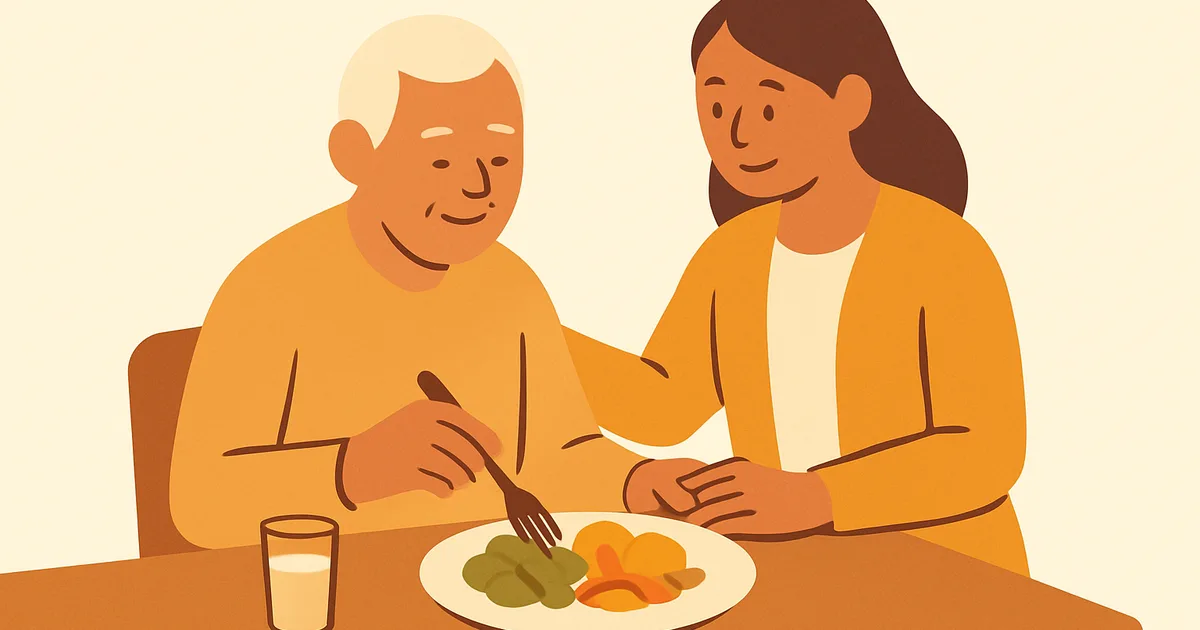
Appetite often quietens with age, and cooking for one is dispiriting, so many older people drift into tea-and-toast eating without anyone quite noticing. The result — slow weight loss, shrinking muscle, less energy, slower healing — is one of the most common and most fixable health problems in later life.
The practical fixes are simple: protein at every meal (eggs, chicken, beans, maas, yoghurt), smaller meals more often rather than three big plates, and — this is the part families underestimate — eating with people. A shared table does more for an older person's intake than almost any dietary advice, because we eat more, and enjoy it more, in company. There's a full guide in nutrition for older adults, but if you change one thing, make it this: fewer meals alone.
Guard sleep
Sleep changes with age — lighter, earlier, more interrupted — and that's normal. What isn't inevitable is bad sleep, and poor sleep quietly drags everything else down: mood, memory, appetite, balance. The basics do most of the work: morning light and daytime movement (the two strongest signals to an ageing body clock), a consistent bedtime, less caffeine after lunch, and a bedroom that's dark and quiet.
Two cautions. Daytime napping that stretches into hours often signals boredom or low mood rather than tiredness — the fix is usually a fuller day, not a stricter night. And sleeping tablets deserve real caution in older adults, because they commonly cause daytime grogginess and unsteadiness; if your parent relies on them, that's a conversation to have with the GP, never a change to make on your own.
Stay connected to people and purpose
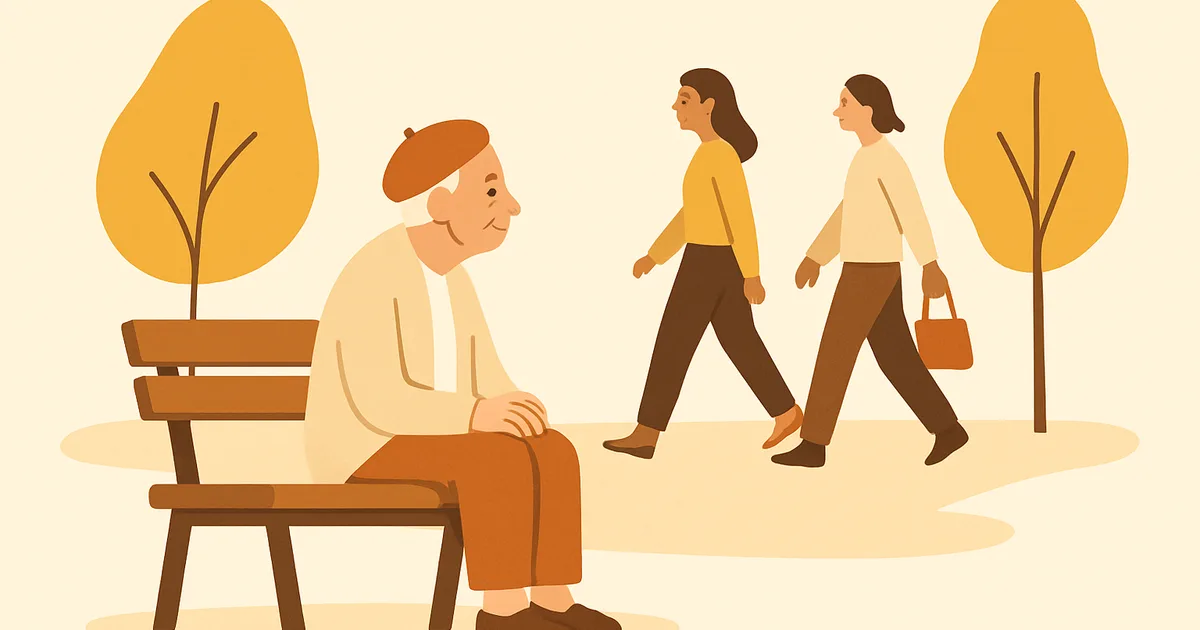
Loneliness is not a soft issue. In older adults it is strongly linked to declining physical and cognitive health — it behaves like a health condition, not a mood. And isolation creeps: driving stops, friends move or pass away, hearing fades, and a once-full week quietly empties.
The remedy is structure, not willpower: regular, scheduled human contact — a standing coffee date, a faith community, a day programme, a weekly call rota among the grandchildren. Purpose matters just as much as company. People stay well when someone or something still needs them — a garden, a role, a neighbour they check on, a skill they pass on. We've written more on this in loneliness and isolation in later life, because for many families it turns out to be the pillar that's quietly cracked.
Manage medication well
Many older people take five or more medicines, often from more than one prescriber, and the daily logistics — what, when, with food or without — become a genuine memory load. Missed and doubled doses are common and consequential.
Good management is mostly systems, not vigilance: one pharmacy that knows the whole picture, one current master list of everything taken (including vitamins and over-the-counter remedies), weekly blister packs or a dosette box, and a regular GP review of the full list — including the excellent question, "can anything be stopped?" Our guide to getting medication management right walks through it step by step.
Catch problems early
The final pillar is the least daily but the most protective: acting early. In later life, small problems become big ones faster — a urinary infection becomes confusion, an unnoticed cataract becomes a fall, low mood becomes not eating. The pattern to watch for is change: eating less, sleeping differently, new confusion, a first fall, withdrawing from calls and visits.
Practically, that means a GP who knows your parent and sees them regularly (not only in crises), annual eye and hearing checks, dental care, and — if your parent is on medical aid — actually using the screening benefits most plans include. Family members are usually the early-warning system here; if something feels different, it's worth a GP visit even when your parent waves it off.
How good care settings build this in
Notice what all six pillars have in common: they're daily, they're ordinary, and they're hard to sustain alone. That is precisely what a good care setting provides — not medical rescue, but a daily life with the wellbeing basics built in. Cooked meals eaten together at a shared table. Gardens and corridors that invite a daily walk. Company that's simply there, without needing to be arranged. Staff who handle medication reliably and notice on Tuesday the change a visiting family might only catch next month.
That's the deliberate design at Dayspring Gardens in Northriding: a small home where meals are home-cooked and eaten in company, there are gardens to walk in, and resident numbers are kept low enough that a changed appetite or a new unsteadiness gets noticed the day it appears. Whether at home with good support or in a setting like that, the goal is the same — an ordinary day that quietly does the work of keeping someone well.
Questions families actually ask
What is the most important thing an older person can do to stay well? There is no single thing — wellbeing in later life rests on a handful of daily habits working together: moving every day, eating proper meals, sleeping well, staying connected to people and purpose, taking medication correctly, and seeing a GP early when something changes. The good news is that every one of these is within reach, and small improvements in each add up.
How much exercise does an older person actually need? Less than most people fear, done more often than most people manage. Daily movement matters more than intensity — a walk, gardening, gentle strength and balance work. Anything that gets an older person on their feet every day counts. A GP or physiotherapist can advise on what is safe for the individual.
Can health and wellbeing really improve in your 80s? Yes. Strength, balance, appetite, sleep and mood all respond to change at any age. Older adults who start moving more, eating better and spending more time in company routinely feel and function better within weeks. Later life is not a one-way slope — much of what we call ageing is actually habit, and habits can change.
Does moving into assisted living help or harm an older person's wellbeing? It depends entirely on the setting, but a good one often helps, because it builds the wellbeing basics into ordinary life: cooked meals eaten in company, safe places to walk, people around by default, and medication handled reliably. For someone who has been isolated or eating poorly at home, that daily structure can be the turning point.
Where to from here
Pick the weakest pillar and start there — one daily walk, one shared meal a week, one medication review. Small, sustained, boring changes are what actually move the needle. If you're weighing whether home life can still provide these basics, our Choosing Senior Care guide helps you think it through calmly — or come and see daily life at Dayspring and watch how the ordinary day does the work.