Preventing Falls at Home and in Care
Falls are the classic turning point in later life — and many are preventable. A practical guide to home hazards, balance, medication reviews and what helps.
If there is one event that changes the course of later life more often than any other, it's a fall. A single stumble can end in a broken hip, a hospital stay, and — sometimes more damaging than the injury itself — a new fear of moving that shrinks a person's world. The hopeful part, and the reason this article exists: falls are not simply bad luck, and much of the risk can be removed. Here is how.
A fall in later life is rarely just an accident. It is usually the visible result of several small, fixable things — weaker muscles, slower balance, dimmer vision, a medication side-effect, a hazardous home — stacking up until one step goes wrong.
That framing matters, because it turns "be careful, Mom" (which helps nobody) into a practical checklist you can actually work through.
Why the risk rises
Four ordinary changes do most of the work. Muscles lose strength with age — especially the leg and hip muscles that catch you when you trip — and they lose it faster when a person sits most of the day. Balance reactions slow, so a stumble that a younger body corrects becomes a fall. Vision dims and narrows, particularly in low light, and untreated cataracts or an out-of-date spectacle prescription quietly raise risk. And medications — sleeping tablets, some blood pressure medicines, sedating painkillers and allergy tablets, or simply many medicines interacting — can cause dizziness, drowsiness or a blood-pressure dip on standing.
None of these alone usually causes a fall. It's the stack. Which also means every layer you improve genuinely lowers the odds.
The home audit: an afternoon that pays for years
Walk through your parent's home as though you'd never seen it, ideally at dusk. You're looking for:
- Rugs and mats. Loose rugs are the classic culprit. Remove them or fit non-slip backing — sentimentality about the passage runner is not worth a hip.
- Cords and clutter. Electrical cords across walking routes, boxes in passages, low furniture that catches a shin.
- Lighting. Bright bulbs in passages and stairways, a bedside lamp within reach, and plug-in night lights on the route to the bathroom — most falls at home happen on that route, at night.
- The bathroom. Grab rails beside the toilet and in the shower, a non-slip mat, and a shower seat if standing is tiring. Rails are inexpensive and any handyman can fit them properly into the wall (not just the tiles).
- Footwear. Loose slippers, smooth-soled shoes and walking in socks all raise risk. Well-fitting shoes with a grippy sole, worn indoors too.
- Stairs and steps. Secure handrails on both sides where possible, and mark the edge of any single unexpected step — the one at the kitchen door is famous for a reason.
Build strength and balance
The home audit removes hazards; strength and balance work removes vulnerability, and it responds at every age. The simplest daily routine costs nothing: standing up from a chair without using hands (repeat until tired), heel-to-toe walking along a passage, and standing on one leg while holding the kitchen counter. Ten minutes a day, most days.
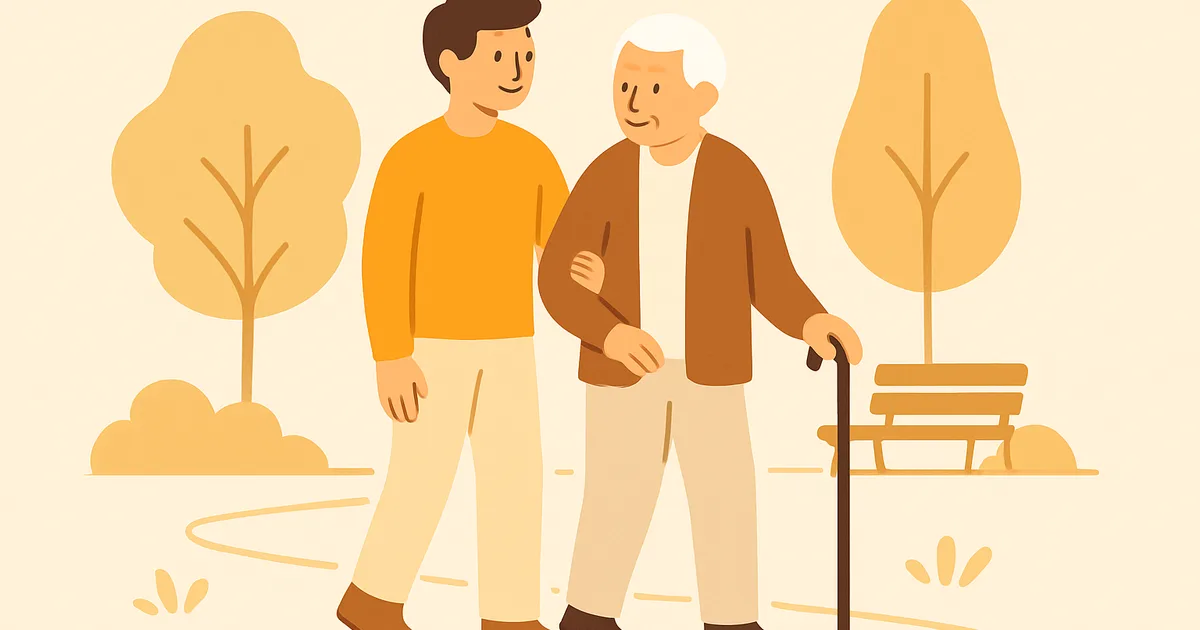
If your parent has already fallen or feels unsteady, ask the GP for a referral to a physiotherapist or biokineticist — many Johannesburg practices run strength-and-balance work for older adults, and some medical aid plans cover it. Walking aids help too, but only when correctly sized and actually used; a walker parked in the corner protects no one, and a borrowed stick at the wrong height can make things worse.
Review the medication list
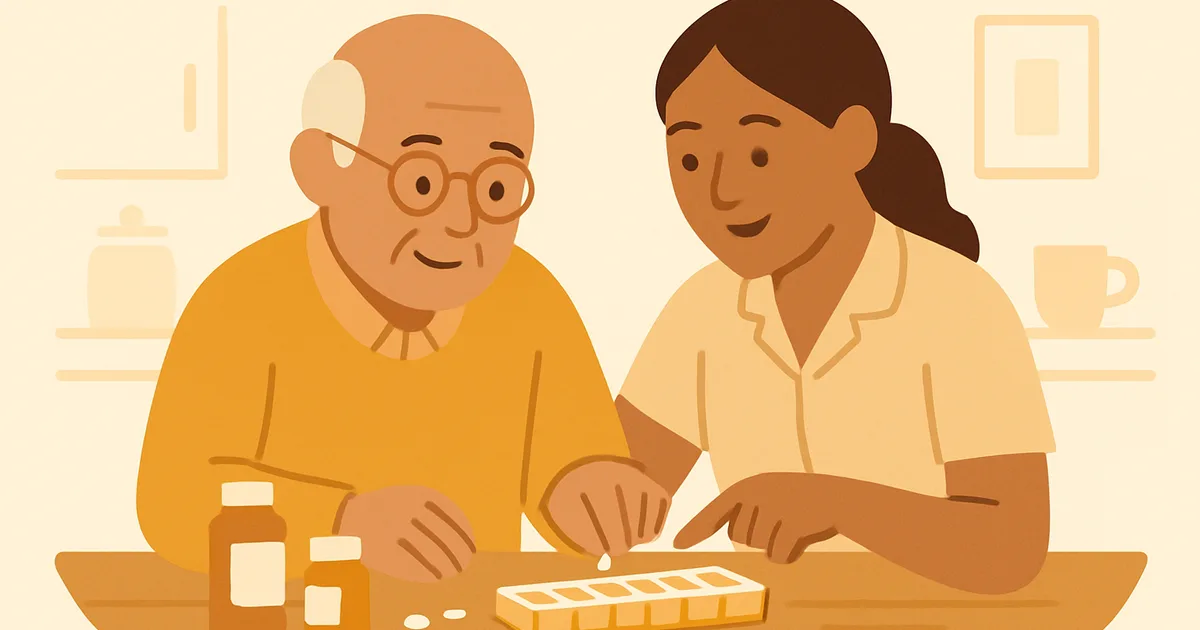
This is the most overlooked fix. Book a GP appointment specifically to review the full medication list — everything, including over-the-counter remedies and supplements — and ask two questions: could any of these be contributing to dizziness or unsteadiness? and can anything be stopped or reduced? Pharmacists are an underused resource here as well; a good pharmacist will happily review a list for interactions. Our guide to medication management covers how to set the whole system up properly.
What changes in a care setting
A well-designed care home removes most of the environmental stack by default: level floors without loose rugs, good lighting everywhere, rails where they're needed, bathrooms built for safety, and call systems so help is a button-press away. But the biggest difference is simpler than any of that — someone is nearby. At home, a person who falls at 2 a.m. may lie until morning; time spent on the floor is often what turns a fall into a crisis. In a small home with 24-hour support, such as Dayspring Gardens in Northriding, a resident is helped in minutes, and staff who see them daily notice new unsteadiness before it becomes a fall at all.
After a fall: why the second one matters
Here's the honest part families need to hear. A first fall — even a harmless one — is the clearest single warning sign in later life, because it usually means the stack is already high, and the second fall is more likely and often more serious. So treat a first fall as information, not embarrassment: see the GP, review medications and vision, fix the hazard, start the balance work.
And have the honest conversation. If falls are recurring despite genuine effort — or your parent now lies awake anxious about the next one — the kind question is whether the current setup can still keep them safe. Sometimes the answer is more support at home; sometimes it's recognising that falls are signalling something bigger. And if a serious fall has already happened, recovery deserves proper support too — we've written about recovering after a stroke or serious fall.
Questions families actually ask
Why do older people fall more often? Several ordinary changes stack up: muscles weaken, balance reactions slow, eyesight dims, and some common medications cause dizziness or drowsiness. None of these alone usually causes a fall — it is the combination, meeting a loose rug or a dark passage, that does. Because each factor can be improved, fall risk can genuinely be reduced at any age.
What is the most common cause of falls at home? There is rarely one single cause — most falls happen when a person's reduced balance or strength meets an everyday hazard: a loose rug or cord, poor lighting on a night-time trip to the bathroom, slippery floors, or unsafe footwear like loose slippers. The home audit and the person's own strength both matter, which is why fixing only one side is not enough.
Can balance really be improved in your 80s? Yes. Strength and balance respond to practice at every age. Simple daily work — standing up from a chair without using hands, heel-to-toe walking along a corridor, standing on one leg while holding the kitchen counter — measurably improves steadiness within weeks. A physiotherapist or biokineticist can tailor a safe programme.
What should we do after a parent's first fall? Take it seriously even if nothing was broken. See the GP to check for causes — blood pressure, vision, medication side-effects — fix the hazard involved, and start strength and balance work. A first fall is the single clearest warning that a second is more likely, and the second one often does the real damage. It is a prompt to reassess honestly, not to panic.
Where to from here
Do the home audit this week, start the daily chair-stands, and book the medication review. Those three steps remove more risk than any amount of worrying. If falls have you rethinking the bigger picture, our Choosing Senior Care guide walks through the options calmly — or come and see daily life at Dayspring and look at what a home built for steadiness feels like.